ABC Tool

Precision Machining Capabilities

Call Us

(541) 484-0721

Built to Your Specifications

ABC Tool & Die provides the machining capabilities and hands-on expertise to take your project from concept through delivery. Using state-of-the-art precision machining techniques, our machinists work to exacting specifications while focusing on quality, reasonable costs, and prompt delivery.
Whatever the project requires, we work with you to produce the part you need and find the right solution for the job.
ABC Tool & Die Co., LLC

Inspection Control

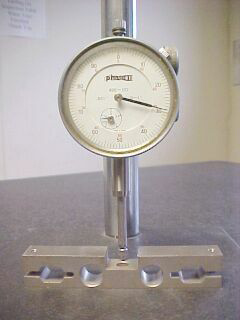
An equally important phase of operations is the continuous inspection of each part at every step of the project. Our inspection equipment includes various sized granite tables, precision gages and indicators, and a Jones and Lamson optical comparator/measuring machine. No part is allowed to progress to the next operation until its specs have been verified, and the part has been deburred. This process continues until the final inspection has been made and the part has been approved for shipping. The precision parts are then packaged for shipment to the customer in accordance with the agreed-upon instructions. Thus, an order is received, processed, produced, and delivered in accordance with requested schedule, with the result that the customer has realized considerable savings in both time and money.

Surface Grinding

ABC Tool employs a large range of precision surface grinders for all of your production needs. This type of grinding works well with all materials, from cast iron to exotic metals. We have a variety of grinding machines, from the very largest down to the smallest, to accommodate all of your business and manufacturing needs.

Knife Grinding

ABC Tool offers a wide range of precision knife grinding services to meet your production and manufacturing needs. Our knife grinding capabilities provide accurate, consistent results across a variety of materials, from standard steels to hardened and specialty metals. With grinding equipment suited for both large-scale and smaller components, we can accommodate a wide range of knife sizes, profiles, and production requirements.

Heat Treating

Heat treating can be defined as the process of heating and cooling a material in such a way as to develop specific structure, chemical composition, and physical properties. It is a vital process in the global effort to produce stronger, more durable parts at lower cost. The wide variety of heat treatment processes available include through-hardening, carburizing and tempering.. Conventional hardening and tempering for parts with a size up to 9 x 18 x 2 inches.
ABC Tool & Die Co., LLC

Lathe

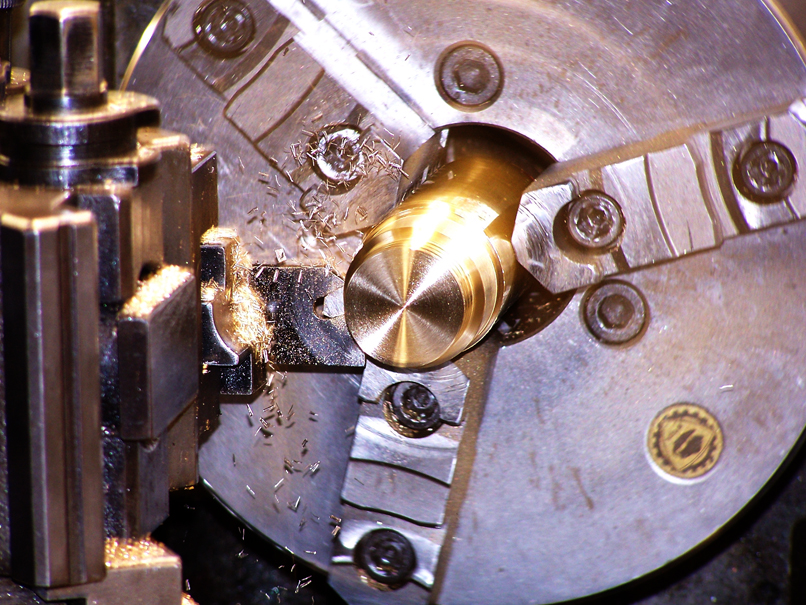
Lathe machining is used to produce turned parts and components with controlled dimensions and consistent results. ABC Tool & Die provides lathe capabilities for projects requiring precision machining of cylindrical and round components.

CNC Milling

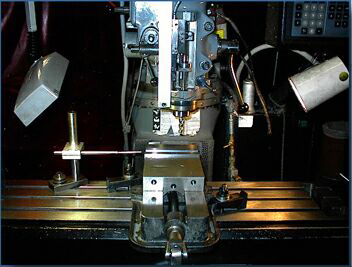
CNC milling supports the precise shaping and machining of custom parts, tools, and components. From straightforward parts to more detailed machining work, ABC Tool & Die uses CNC capabilities to turn project designs and specifications into finished components.
ABC Tool & Die Co., LLC

Sinker EDM

Electrical Discharge Machining (EDM) is a metal removal process accomplished by the creation of thousands of electrical discharges per second that flow between an electrode and the workpiece in a dielectric fluid. It has the effect of vaporizing the metal in a very small controlled area. The EDM process can be used on any material that is electrically conductive, including exotic materials such as Waspaloy or Hastaloy, which are very difficult to machine using conventional methods. There are two major types of EDM, Wire EDM and Sinker EDM (sometimes called Ram or Conventional EDM). Sinker EDM is the older of the two. Although the EDM principle was discovered during the early 1940s, it was not until the early 1950s that the first practical Sinker EDM machine was designed. Wire EDM was introduced as a machining process in 1969. The main difference between the two is the type of electrode used. Wire EDM, as its name suggests, uses wire as the electrode. The wire burns a predetermined contour through the part leaving a path of 0.001″ to 0.003″ larger than the wire diameter. The wire diameter ranges from 0.0005″ to 0.0130″. Brass is the most common wire used along with zinc-coated wire. Smaller wires are generally made of molybdenum or tungsten. Sinker EDM, as its name suggests, sinks the shape that is on the electrode part way into the workpiece. The common types of electrode materials used are graphite (for ease of machining and wearability) and copper tungsten (for fine finish requirements).
Electrical Discharge Machining (EDM) is a metal removal process that uses controlled electrical discharges between an electrode and workpiece in a dielectric fluid, allowing it to machine electrically conductive materials, including difficult alloys like Waspaloy and Hastaloy. The two main types are Wire EDM, which uses a thin wire electrode to cut precise contours, and Sinker EDM, which uses a shaped electrode, typically graphite or copper tungsten, to create the desired shape in the workpiece.
Wire EDM

Electrical Discharge Machining (EDM) is a metal removal process that uses controlled electrical discharges to vaporize metal in a small area. It can machine electrically conductive materials, including difficult alloys such as Waspaloy and Hastaloy. The two main types are Wire EDM, which uses a thin wire electrode to cut precise contours, and Sinker EDM, which uses a shaped electrode, typically graphite or copper tungsten, to create detailed shapes in the workpiece.
Scroll to Top